

Introduction to Cyberdyne HAL Exoskeleton Technology
About Course
🧾 Course Description:
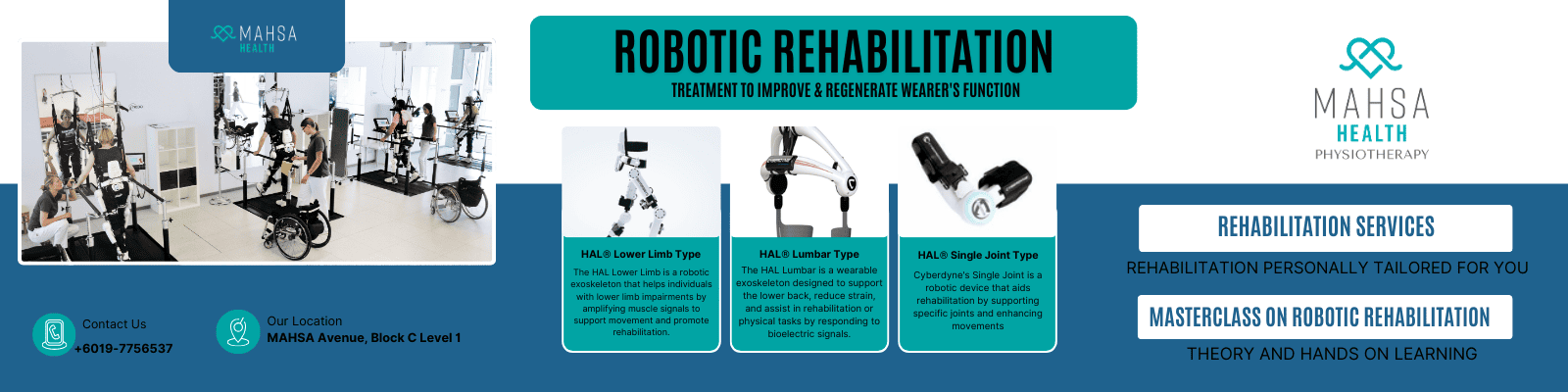
This masterclass introduces participants to the Cyberdyne HAL exoskeleton system, a groundbreaking assistive technology that bridges human intention and robotic motion. Attendees will discover how the suit reads bio-electrical signals to support movement, its application in rehabilitation and industrial settings, and gain hands-on experience with the HAL Lower Limb, HAL Lumbar, and HAL Single Joint systems.
👨⚕️ Who Should Attend:
-
Physiotherapists & Rehabilitation Specialists
-
Biomedical Engineers
-
Occupational Health Practitioners
-
Researchers in Robotics or Healthcare
-
HealthTech Entrepreneurs and Innovators
🌟 Learning Outcomes:
-
Understand how Cyberdyne HAL reads and responds to bio-electrical signals
-
Identify clinical and industrial use cases of HAL
-
Experience the capabilities of HAL LL, SJ, and Lumbar in live demo
-
Gain awareness of HAL’s feedback loop for neuro-motor rehabilitation
-
Discuss future potential, implementation barriers, and ethical concerns
🧩 Curriculum:
1. Introduction to HAL Motion Principle
Overview of Cyberdyne and HAL’s development, how it detects BES (bio-electrical signals), and transforms them into assisted motion.
2. Technology Overview
Explore HAL’s components: sensors, actuators, control systems, and the neural feedback mechanism.
3. HAL Systems Introduction
-
HAL Lower Limb Type: Amplifies lower limb movement
-
HAL Lumbar Type: Supports lower back, reduces load
-
HAL Single Joint Type: Enhances motion in targeted joints
4. Applications in Rehabilitation & Industry
Clinical use: post-stroke, spinal cord injury, orthopedics
Industrial use: motion support in physically demanding jobs
5. Hands-On Demonstration & Wear Test
Live interaction and guided try-on of HAL systems
6. Challenges & Ethics
Cost, training needs, accessibility, and ethical implications in assisted robotics
7. Evaluation & Reflection
Interactive recap, Q&A, feedback form, and certificate issuance
📦 Materials Included:
-
Course slides (PDF)
-
Cyberdyne HAL brochures
-
Access to demo videos and suit trials
-
Participation Feedback Form
-
Certificate of Attendance
⏱ Duration:
1 Day (9 AM – 5 PM)
Includes breaks, demo sessions, and feedback collection
📍 Venue:
MAHSA Physiotherapy Centre
Level 1, Block C, MAHSA Avenue
Jalan Ilmu, Off Jalan Prof. Diraja Ungku Aziz
59100 Kuala Lumpur
📞 Contact Information:
📧 mahsahealth1@gmail.com
🌐 https://mahsahealthnexus.com
📲 +6019-7756537
📸 Instagram: @mahsaphysioclinic